
The Georgia COAM 50% rule, explained
A Georgia location can't derive more than 50 percent of its gross retail receipts for a calendar quarter from Class B machines. The test compares your share of machine revenue with your business sales, so your business has to be a real business first.
 By Justin Gilmore Last reviewed: November 6, 2026 4 min read
On this page
What does the rule say?
No location owner or operator can derive more than 50 percent of its quarterly gross retail receipts for the business location from Class B machines. Money due to the master licensee or the Georgia Lottery, and prizes earned by players, don't count as revenue derived from the machines (O.C.G.A. § 50-27-84). Certain fraternal benefit associations and veterans organizations are exempt.
The Georgia Lottery calls this one of the most significant COAM laws, as significant as the ban on cash prizes, because a location must have a working business other than machines (GLC notice).
What numbers does it compare?
In a review, the Georgia Lottery compares your gross retail business sales with your share of machine revenue (GLC notice). Two things follow:
- Top of the comparison: your share. Money due to the master licensee or the Georgia Lottery isn't counted as your COAM revenue (GLC FAQ).
- Bottom of the comparison: your sales of goods and services, kept separate from machine money. Your lottery sales commission counts, and the face value of lottery instant tickets used as prizes doesn't (GLC FAQ; GLC notice).
Fuel sales count toward retail receipts, under the statute's "sale of goods and services" wording (O.C.G.A. § 50-27-84). If fuel sales fall, the same machine revenue becomes a bigger share, so stores near a cheaper competitor watch this most.
Some businesses aren't settled yet. Whether washer and dryer revenue counts as gross retail receipts is one of the open questions in our laundromat guide.
The limit is checked over each calendar quarter: the statute says "quarterly gross retail receipts" (O.C.G.A. § 50-27-84), so the three months are taken together (gacoam.com). You or your accountant enter your sales on the COAM website each month (GLC FAQ), and the Georgia Lottery can compare those figures with the sales tax returns (Form ST-3) your business already files each month.
What does this look like in practice?
These are round illustrative numbers, not real locations and not predictions. Each uses a 30-day month and the location's 43.5 percent share. The rule looks at three months together, so a steady month gives the same percentage.
- Bar. $40,000 in monthly sales, 4 machines at $100 net a day. Total net is $12,000, and the location's share is $5,220. That's about 13 percent of sales: within the limit.
- Restaurant. $25,000 in monthly sales, 6 machines at $110 net a day. Total net is $19,800, and the location's share is $8,613. That's about 34.5 percent of sales: within the limit.
- Convenience store. $15,000 in monthly sales, 9 machines at $120 net a day. Total net is $32,400, and the location's share is $14,094. That's about 94 percent of sales: well over the limit.
The store's problem isn't the machines themselves. Its sales are too small for that many machines at that level of play.
Check your own numbers
Nothing you type here is stored or sent.
Added to your gross retail receipts. Use what you earn on lottery sales, not the value of the tickets.
Your estimated share of machine revenue: $12,720 for the quarter, which is 14.1% of your retail sales. The rule allows up to 50%.
Within the limit
Example only: 3 machines at the statewide average with $90,000 in retail sales for the quarter.
This is a planning estimate. The operator and the Georgia Lottery's reporting determine compliance.
What the rule measures. The statute says a location can't derive more than 50 percent of its "quarterly gross retail receipts" from Class B machines (O.C.G.A. § 50-27-84). The limit is checked over each calendar quarter, so this tool works by the quarter (gacoam.com). You still report your sales each month on the COAM website (GLC FAQ).
- The Georgia Lottery compares your share of machine revenue with your gross business receipts.
- Money due to the master licensee or the Georgia Lottery isn't counted as your COAM revenue.
- Your lottery sales commission counts in gross retail receipts.
- The face value of lottery instant tickets used as prizes isn't counted in gross retail receipts.
What happens if a location goes over?
Going over can bring enforcement action and administrative penalties, and the penalty depends on how far over and how often. The law lets the Georgia Lottery fine a license holder, or suspend or revoke a license, for single or repeated violations (O.C.G.A. § 50-27-84), and its notice points to administrative orders showing the consequences (GLC notice). It's uncommon for restaurants and bars.
In practice, owners who run close watch their first two months so they know where they stand going into the third. If you expect to run close late in a quarter, talk with your operator early. Don't power machines down on your own to stay under the line: the Georgia Lottery says Class B machines have to stay powered on and connected, and powering them down can bring a citation (GLC FAQ; GLC guide).
Local rules can add to this: some ordinances repeat the 50 percent limit or ask for reports. See the local rules table.
What records should I keep?
Keep machine records, including redemption records, separate from your business sales, and retain them for at least the last five full calendar years. Don't include machine revenue or redemption in the sales figures you report (GLC notice). See what machines earn for realistic inputs.

Check my venue
No fee to you. Nothing is shared until you send.
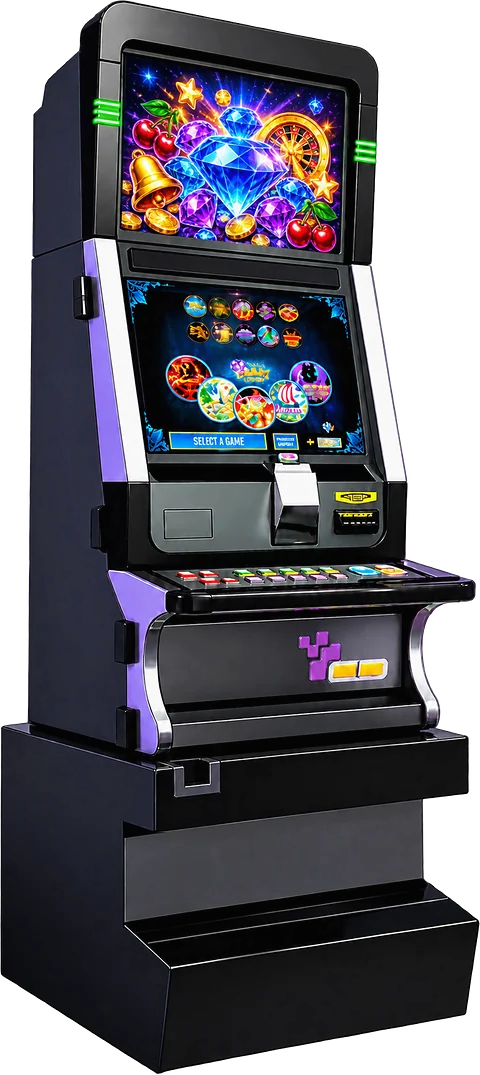
Behind this form: example game screens. Georgia prizes are non-cash: gift cards, lottery products or replays.
Sources
- O.C.G.A. § 50-27-84(b)(1), in the Lottery for Education Act, checked November 5, 2026
- GLC notice: Gross Retail Receipts Rule and Accurate Reporting, checked November 5, 2026
- GLC FAQ for location license holders, version 7.0, checked November 6, 2026
- GLC Location License Holder Guide, version 1.02, checked November 6, 2026
- gacoam.com notice on quarterly gross retail receipts reports, checked November 5, 2026
- GLC FY2026 financial statements, checked November 5, 2026
Before you rely on this page
We wrote this page in good faith from the sources linked above, and it reflects our understanding as of the last reviewed date. It's general information, not legal advice for your business. Rules can differ by county and city and can change. Check with the Georgia Lottery or your own attorney before you act on it.
Last reviewed: November 6, 2026